.webp)











HelloCoin Game Guide
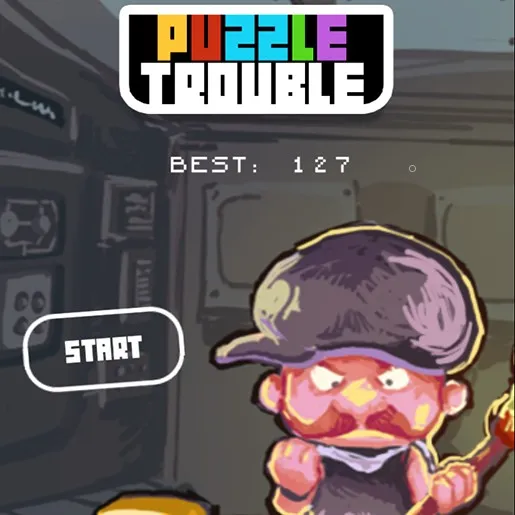
Puzzle Trouble: Study the rules of each challenge before moving pieces or committing an answer
A first session of Puzzle Trouble becomes easier to understand when the objective and the pressure point are separated. The main objective is to solve a sequence of visual, spatial or logic puzzles with the fewest unnecessary attempts. The game may change puzzle type between stages. A method that works for one challenge can be misleading in the next, so observation must come before action.
Game category: Puzzle | Primary objective: Solve a sequence of visual, spatial or logic puzzles with the fewest unnecessary attempts.
Why planning matters here
Puzzle Trouble rewards flexible thinking. The difficulty often comes from an assumption carried over from a previous stage rather than from complicated controls.
How the play loop works
- Identify what can be moved, selected or changed.
- Look for a stated target, pattern or final arrangement.
- Test the smallest reversible action first.
- Use the result to refine the rule before making a larger commitment.
Where beginners usually lose control
- Interacting immediately without understanding the target.
- Assuming every stage follows the same rule.
- Repeating a failed move with only a cosmetic change.
Useful habits for a stronger attempt
- Describe the puzzle in plain words before solving it.
- Check corners, empty spaces and repeated shapes for hidden structure.
- Use elimination when several answers look possible.
- Restart only after identifying what the failed attempt taught you.
A useful way to review the round
A useful review of Puzzle Trouble begins a few actions before the final mistake. Check whether this habit was involved: Interacting immediately without understanding the target. Test this practical response without changing the rest of your plan: Describe the puzzle in plain words before solving it. Comparing two attempts with one changed habit produces clearer feedback than several rushed retries.
Quick answers before you play
What should I do when the instructions are minimal?
Identify the elements that respond to input and test one small change. The reaction often reveals the underlying rule.
Is restarting a failure?
No. A restart is useful when it follows a clear observation about why the previous approach could not work.
Playing clearly on your device
Mouse or touch input works well for selection-based puzzles. A larger screen can make small symbols and spatial relationships easier to inspect.
Who may enjoy Puzzle Trouble
For players who enjoy mixed puzzle collections, observation and discovering a new rule from limited information, Puzzle Trouble offers a clear challenge without a complicated starting point. For an early goal, concentrate on this habit: Check corners, empty spaces and repeated shapes for hidden structure. This reduces avoidable errors and leaves more attention for the central goal of learning to solve a sequence of visual, spatial or logic puzzles with the fewest unnecessary attempts.